Professional sanitation and food safety professionals in Brampton assist restaurants, food centers, bakeries, warehouses, and mobile food services maintaining standards. They decontaminate regularly touched surfaces, food preparation surfaces, equipment, floors, drains, restrooms, and prep zones with approved chemicals, at correct dilution, and documenting contact times. You need regular sanitation determined by risk, volume, food allergies, and regulatory assessments, plus documented proof that support Hazard Analysis Critical Control Points, audits, and public health compliance. The following information explains how effective cleaning systems should include.
Essential Summary
- Sanitation specialists in Brampton support restaurants, grocery departments, commissaries, warehouses, bakeries, schools, mobile vendors, and allergen-sensitive operations.
- High-touch surfaces, food-contact equipment, kitchens, floors, drains, restrooms, and storage areas are sanitized using zone-based workflows to avoid cross-contamination.
- Filing of completion through tests, inspections, and remedial documentation confirms certified specialists have verified approved sanitizer dilution, suitability, and contact time.
- Hazard, production volume, transitions, accidents, and regulations ought to guide sanitation calendars, with regular, weekly, and annual activities designated by location.
- Highlight vendors exhibiting hazard analysis knowledge, health regulatory understanding, safety training instruction, coverage, references, coded equipment, and compliance-ready sanitation documentation.
Which Brampton Facilities Need Food Safety Cleaning?
Food safety cleaning is essential for any Brampton facility that handles, maintains, prepares, packages, or offers food. Apply it to your business if it meets the criteria for public health review, food regulations, or HACCP protocols. This includes food service venues, employee dining, supply facilities, retail sections, butcheries, seafood counters, retail shops, and facility kitchens.
You also need adherent sanitation protocols in supply warehouses, manufacturing facilities, refrigerated storage, bakeries, school feeding programs, reception facilities, and delivery centers. Mobile and seasonal operations count too, including mobile kitchens, festival sellers, and temporary food stands. If your staff work with raw supplies, divide prepared foods, warm dishes, or organize allergen inventory, your facility needs written cleaning standards. In Brampton, sanitation isn't optional; it's part of statutory, business, and public health compliance.
What Do Brampton Cleaning Professionals Handle?
You require experienced cleaning professionals who disinfect high-touch surfaces, cooking areas, flooring, and restroom facilities to ensure compliance with food safety and health standards. These locations are prioritized because they carry the greatest contamination risk, slip and fall dangers, and regulatory breaches.
By understanding their service scope, you are able to confirm your facility's cleaning procedures meet compliance standards.
Sanitizing High-Touch Points
organize cleaning frequency based on activity levels, infection risk, and how the space is used.
confirm that cleaning has adequate
Kitchens, Floors, and Restrooms
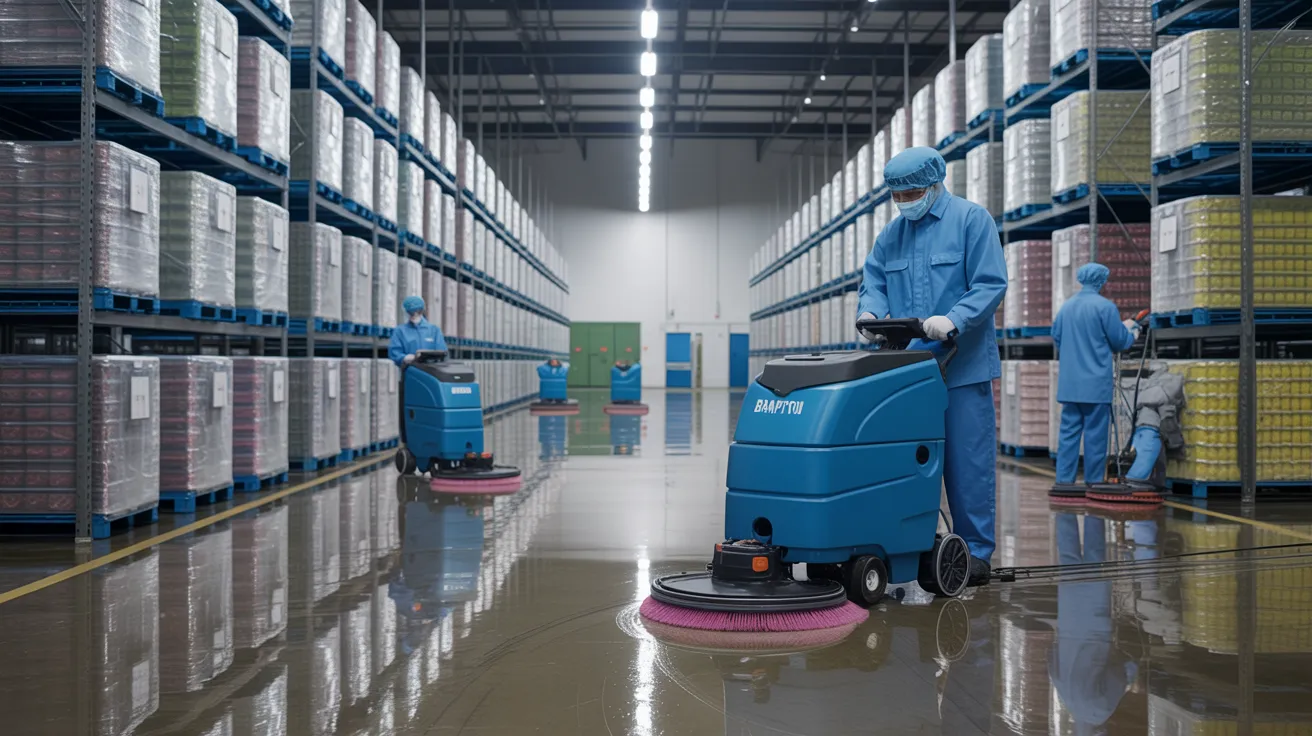
Expect Brampton cleaning experts to target kitchens, floors, and restrooms because each area carries unique foodborne illness prevention, slip-and-fall, and public health risks. In industrial kitchens, you need degreasing on cook lines, equipment exteriors, drains, prep surfaces, and splash zones to minimize bacterial growth and pest activity.
You should also expect documented flooring maintenance. is likewise provided as part of the service.
Restroom sanitation involves disinfecting touchpoints, fixtures, partitions, dispensers, and waste containers, restocking supplies and controlling odours. They also service restaurant moprooms, where chemical storage, sink hygiene, and drainage conditions can affect sanitation compliance and staff safety daily.
The Importance of Food Safety Cleaning in Brampton
In Brampton, you must copyright food-safe cleaning standards to meet regulatory standards and achieve compliance. You also minimize bacterial spread through proper cleaning of food-preparation surfaces, appliances, and frequently-touched items. Most importantly, you safeguard community wellness by reducing the chance of food poisoning in your establishment.
Food Safety Regulations
Because Brampton food operations operate under mandatory safety protocols, food safety cleaning directly impacts your capability to fulfill health code requirements, defend customers, and sidestep enforcement action. You must maintain sanitized food contact points, documented cleaning schedules, proper chemical use, and auditable operational standards that align with municipal and provincial inspection expectations.
When cleaning standards weaken, citations, corrective directives, reputation damage, and operational disruption from subsequent audits or compliance reviews become threats.
Cross-Contamination Prevention
Following regulatory requirements depends on your skill in stopping cross-contamination in daily food handling and cleaning. You should isolate raw items from prepared foods, disinfect work areas after use, and store chemicals away from food-contact items. Well-defined guidelines decrease contamination chances and support consistent compliance during inspections.
You might establish allergen separation to stop main allergens from reaching common areas, containers, or machinery. Apply separate boards, color-marked equipment, and rigorous tool identification so team members avoid blending products during preparation or service. Mandate handwashing after handling raw meat, seafood, eggs, or allergen-containing products. Swap cleaning rags frequently, and test disinfectant concentration using strips. When employees learn these procedures each shift, you develop a more sanitary, secure business that matches Brampton's safety requirements every day.
Public Health Protection
Should cleaning standards collapse, you don't simply encounter inspection problems—you increase the potential of foodborne illness impacting customers, staff, and the wider Brampton community. You also weaken your role in safeguarding community wellness, especially in busy food facilities where pathogens travel quickly through surfaces, equipment, and touchpoints.
You must establish cleaning procedures that eliminate soils, sanitize properly, and verify outcomes. This involves adhering to contact periods, utilizing approved disinfectants, logging schedules, and instructing staff to satisfy regulatory standards. These mechanisms support pathogen reduction by decreasing microbes before reaching food or hands. Across Brampton, strong cleaning safeguards vulnerable groups, reduces disease potential, and demonstrates accountability. When you follow standards, you exceed regulations—you substantially lower hazards and enable safer food service city-wide.
How Can Cleaning Practices Ensure Food Safety Compliance?
Committing to thorough cleaning protocols underpins food safety compliance by decreasing contamination threats, preventing pathogen multiplication, and positioning your facility in accordance with sanitation requirements under HACCP-based programs and public health regulations. You verify that contact surfaces stay visibly clean and microbiologically controlled, enabling documented preventive controls and inspection readiness.
Diligent cleaning further strengthens allergen management by eliminating residues that can cause undeclared allergen exposure. When you integrate established sanitation practices with safety training, your staff can execute established protocols, apply approved chemicals properly, complete records thoroughly, and manage variations before escalation occurs. Systematic cleaning facilitates supply chain documentation, validates corrective actions, and exhibits commitment during audits. Additionally, it assists you maintain product safety, copyright compliance standards, and lower the risk of punitive measures, recalls, grievances, and unnecessary health hazards.
What's the Best Time to Arrange Commercial Cleaning?
Cleaning routines work best when you set them according to risk, production volume, and regulatory requirements rather than depending on a fixed calendar alone.
Arrange cleaning prior to and following promotional events, functions, or public [[functions for smooth event turnarounds.
How Do You Choose Brampton Cleaning Experts?
Begin by evaluating providers based on sanitation compliance standards—not solely on budget. You should confirm that each organization comprehends CFIA, public health, and HACCP-aligned expectations applicable to your facility. Request proof of insurance, WHMIS compliance, staff training documentation, and oversight procedures. Assess whether technicians recognize cross-contamination hazards, chemical handling protocols, and verifiable sanitation records.
Additionally, you need to evaluate operational reliability and accountability. Obtain references from Brampton food operations, then review response times, corrective-action procedures, and communication standards. Verify the company supports supplier audits and can deliver inspection-ready documentation when inspectors or external parties need proof. Verify equipment is maintained, color-coded equipment are applied correctly, and site-specific hazards are identified. A qualified provider ensures compliance, product integrity, and your reputation.
What's covered in a Food Safety Cleaning Plan?
Develop a written plan that clarifies every sanitation responsibility, standard, and task before production begins. You should detail cleaning frequencies, approved chemicals, dilution rates, contact times, tools, and verification methods for each zone, surface, and piece of equipment. Include pre-operational inspections, corrective actions, and employee training requirements.
Your framework should also include cross-contamination controls, waste handling, pest-prevention measures, and documented schedules for restrooms, drains, floors, and food-contact areas. Clarify how you'll separate raw and ready-to-eat processes, help with ingredient tracking, and copyright accurate allergen labeling through validated cleaning between product changes. You should establish accountability, preserve signed records, and review results against regulatory standards, HACCP controls, and customer requirements. When gaps appear, revise procedures immediately and re-educate staff.
Frequently Posed Questions
Do sanitation providers operate during overnight shifts at Brampton facilities?
Yes, you can schedule cleaning services to accommodate overnight shifts in Brampton facilities. You'll coordinate overnight sanitation around operational schedules, security measures, and staffing requirements. Services generally outline nightshift logistics to reduce disruption, maintain compliance, and document completed tasks. You should confirm response times, oversight, lockout procedures, and disposal methods before service begins.
Can sanitation professionals manage hazardous incidents?
Yes, you can find Brampton cleaning experts to offer hazard containment services. They handle hazard containment, assess risks, contain contamination, and begin swift cleanup to reduce exposure and business interruption. You should verify arrival timeframes, training certifications, safety procedures, and disposal procedures. If your facility must meet health valuable guide or food safety regulations, select a service that records events, follows compliant sanitation standards, and supports audit readiness.
Will plant-based disinfectants clean safely food-contact surfaces?
Definitely, green disinfectants work safely on surfaces contacting food if you select solutions certified for food use that adhere to regulatory compliant. You ought to validate application timing, concentration levels, and rinse protocols prior to application. Natural-based solutions reduce chemical hazards, but you must have proof of efficacy against specific pathogens. To keep surfaces residue-free, follow exact manufacturer guidelines and verify your sanitizer meets relevant food safety standards.
Can cleaning schedules be adjusted for seasonal variations?
Yes, you can modify cleaning schedules for seasonal production changes. You should revise intervals, staffing, cleaning agents, and confirmation procedures to correspond to operational cycles while preserving regulatory compliance. You'll minimize operational delays by planning sanitation around changeovers, peak volumes, and usage cycles. You should further modify standard operating procedures, instruction programs, and environmental monitoring to capture transient threats, novel allergens, or higher contamination levels. Regular reviews ensure your strategy effective.
Do commercial cleaning providers coach staff members in proper hygiene techniques?
Yes, commercial cleaners typically educate your staff on sanitation best practices. You receive employee instruction on proper chemical use, exposure periods, contamination control, machine breakdown, and record keeping. They typically align instruction with HACCP, GMP, and CFIA or local public health requirements. Many also conduct hygiene inspections to verify compliance, identify gaps, and strengthen remedial steps. This allows you to sustain uniform processes, pass inspections, and reduce food safety risks regularly.
Closing Remarks
By partnering with Brampton commercial cleaning and food safety experts, you aren't simply tidying—you maintain your facility compliance-focused and your practices up to code. From kitchens to processing floors, every clean surface and maintained corner decreases contamination and avoids expensive losses. By scheduling cleanings on the right schedule and following a documented cleaning plan, you secure staff members, clients, and your credibility. In a strictly regulated industry, hygienic conditions must be prioritized—they're key to business compliance.